


Parboiled
- May 19
- 4 min read
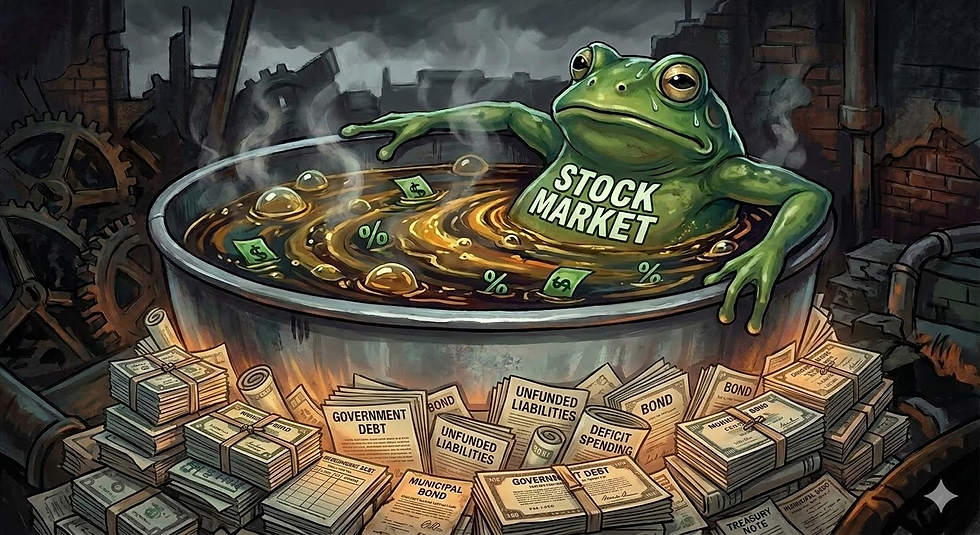
Come on in, the water's fine.
But can anybody tell when it's time to get out? It has been said that valuation is a lousy timing tool in the stock market. But now that the global bond bears are in the ascendancy, I'm paying more attention to valuation.
It's not like anybody has been arguing that stocks are cheap over the last couple of years; they haven't been cheap since the 'Covid-19' bottom in 2020! The chart below is evidence of that. Admittedly, the rally since the 'Liberation Day' bottom has been supported most by rising earnings, combined with expectations of future rate cuts from a laissez-faire Fed. This has forestalled any financial reckoning between bond and stock valuations. But the second derivative of earnings expectations is now negative, and rate cuts are suddenly off the table. Cue the correction!
S&P 500 Earnings Yield vs. 10yr Bond Yields
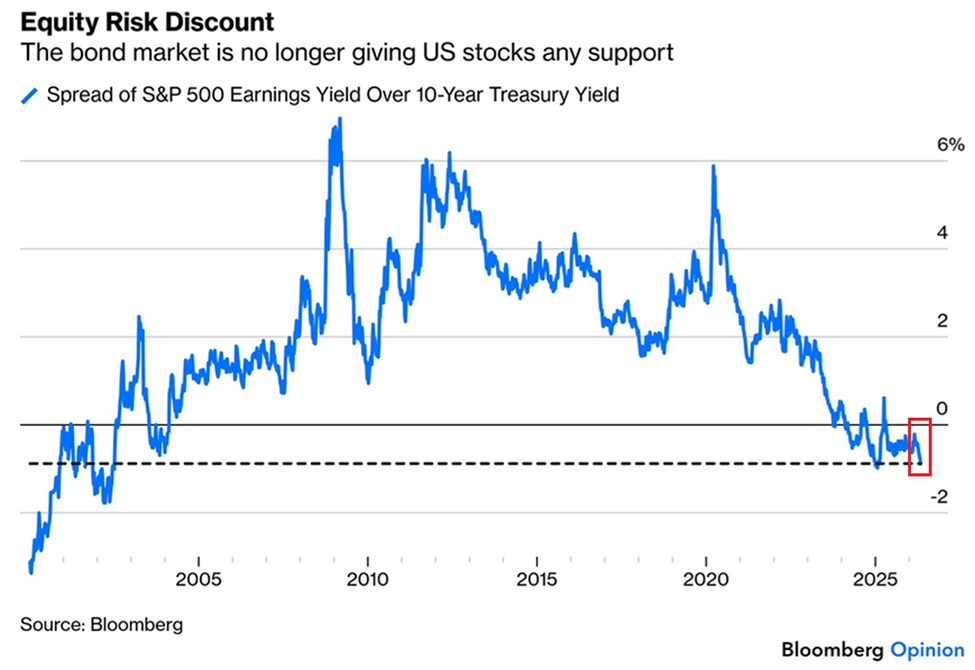
With the advent of the Fed's 'easy money' doctrine as the response to any stock market crisis since the GFC, the stocks have been emboldened by ZIRP, QE, and dovish guidance (remember Powell's "transitory" adjective?) since 2008 - all to the detriment of the relative valuation. Bonds are under threat on multiple fronts - not just from rising inflation premiums. Fiscal prudence is in short supply globally. The supply surge from an out-of-control U.S. budget, and it's no wonder the curve is bearishly steepening.
It's all very rational in hindsight. Being an "equities guy," I count myself as a bond perma-bear. Haven't I always said the basic problem with fixed income is that you don't really 'own' anything but a promise? And that's before considering an issuer's ability to continue to dilute existing holders. The bond crop never fails! That has emboldened believers in the cult of equities, thus producing this extreme stock-bond market valuation mismatch.
Having managed money in the 1980s gives me some credibility to say that I think that reckoning is an existential threat to the current bull market. Back then, I held a similar disdain for bonds - much to my detriment in October of 1987. It was dysfunction in the bond markets that year that catalyzed the sudden collapse of confidence in that eventful month. I still remember the shock of that event vividly. A kind of financial PTSD runs through me. Experiencing a crash comparable to 1929 will do that to you.
Then came the 2008 Great Financial Crisis - the GFC. I still remember looking at the collapsing equity markets back then and asking my bond manager what a credit default swap was. Again, the catalyst was a wobbly fixed-income market due to a sudden evaporation in appetite for mortgage-backed debt.
Equities serve investors at the pleasure of the fixed income markets. That's what the bulls always get wrong at the top.
But the most seminal event in my career was the 1982 bear market, my first, also triggered by a fixed-income debacle. Back then, runaway inflation was the culprit, and the Fed Chair at the time, Paul Volcker, was the ultimate 'bad cop' of central bankers. He forced rates above inflation expectations and stopped the credit -fuelled equity market in its tracks. This equity rookie trader was quickly 'schooled' by the bond market.
This week will see the swearing in of Kevin Warsh as Trump's hand-picked successor to Jerome Powell as Federal Reserve Chair. With a MAGA guy in charge, any risk of a Volcker-esque 'come to Jesus' moment in Fed policy is now off the table. And, how long before he toes the line on Trump's easy money mandate and obediently cuts rates? Watch for the long end to get creamed on that fat tail event.
The potential for NACHO (not a chance Hormuz opens) to replace TACO (Trump always chickens out) has reversed my earlier optimism about the economic playbook for 2026. Either way, it's hard to see any resolution to the conflict that doesn't create a more lasting inflationary bias to the economy. A quick resolution with ultimately lower oil prices will spur already extended markets higher and trigger overheating in a now supply-challenged economy. Alternatively, an intransigent Trump refuses to deal, thereby raising headline inflation another notch. Heads I win, tails you lose, bond market
So, at some point, it will be left to the fixed-income adults to step into the equity toddler's playroom and put a halt to the shenanigans. We are getting ever closer to that point.
Stock bulls (shown below after buying stocks at all-time highs) have ridden up the escalator of momentum, fuelled by AI-driven dreams of great things to come. The risk is that they will have to ride down the valuation elevator, forced by the bond market to reluctantly press "G."

Risk Model - 4/5 - Risk On
Only the slight drop in AAII Bulls is not confirming the Model's risk-on status. The compelling AI narrative market (Oh, those NVDA Earnings!!) is allowing investors to ignore the risks posed by a collapsing bond market. The TACO vs. NATCHO stalemate has the market on a knife-edge, generating a sideways tape and keeping the VXV in check. As I flagged last week, Copper is sharply underperforming Gold, with spec positions still elevated, but the signal remains positive for risk.
Currently, inflation expectations are breaching 5% according to the latest CNBC Predictions Market data. Consequently, with the 2-year Treasury at 4.2%, real rates are negative, thus supporting equity risk-taking. This allows the FOMO players to stay long. The trigger event to watch is when the adjustment to the new inflationary environment at the long end (now firmly above 5%) filters down to the front end. At that point, I'm pressing the down button.
Comments